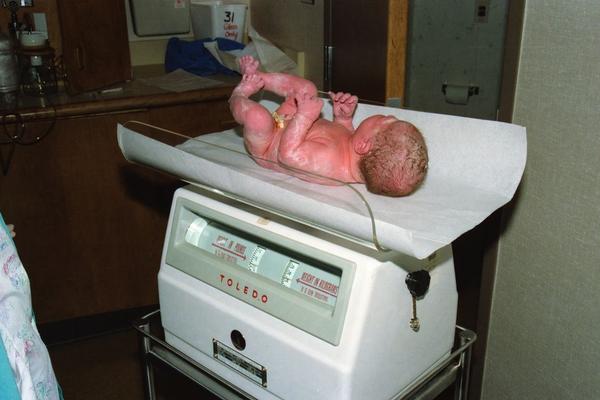
Seeing the number on the scale drop after birth can be unsettling, especially when every feed, diaper, and nap already feels important. Yet some newborn weight loss in the first week is expected. Babies are born with extra fluid, and they naturally lose part of that fluid while feeding patterns and milk supply are becoming established.
The key is not a single number by itself. Clinicians look at how much weight has been lost, the baby’s age in hours or days, feeding effectiveness, urine and stool output, jaundice, and the baby’s overall appearance. A newborn weigh in is therefore one piece of a broader first-week check rather than a pass-or-fail test.
Why newborns lose weight after birth
During the first few days, healthy newborns commonly weigh less than they did at birth. Part of the change reflects normal fluid shifts. For breastfed babies, intake is also small at first because colostrum is produced in modest amounts before milk volume increases. Formula-fed babies can lose weight too, although feeding patterns differ.
Weight often reaches its lowest point during the first three to five days and then begins to rise. Many babies regain their birth weight around 10 to 14 days, but there is normal variation. Research published by the American Academy of Pediatrics has shown that some healthy babies, particularly those born by cesarean delivery, may still be below birth weight at two weeks.
How much weight loss is considered concerning?
There is no universal percentage that tells the whole story. For a healthy, full-term baby, a loss of around 7% of birth weight can occur during the early days. When loss approaches or reaches 10%, clinicians generally pay closer attention to feeding and hydration. The Academy of Breastfeeding Medicine notes that a loss of 8% to 10% on day five or later can still occur in some well babies, but it should trigger careful assessment rather than be dismissed.
This distinction matters. A 10% drop on the scale does not automatically mean a baby is 10% dehydrated, nor does it automatically mean breastfeeding has failed. It means the care team should look more closely at milk transfer, feeding frequency, latch, output, jaundice, and the baby’s medical history.
A simple example
Suppose a baby is born at 7 pounds 8 ounces and is noticeably lighter at a follow-up visit. The pediatrician will not rely on the percentage alone. They may ask how often the baby feeds, whether swallowing is heard, how long feeds last, whether the baby wakes for feeds, how urine and stool patterns are changing, and whether jaundice is increasing. A second weight check may be arranged soon afterward to see the direction of travel.
Feeding and baby weight in the first week
Early feeding weight changes are closely connected with how effectively a baby is taking in milk. For breastfeeding newborns, the American Academy of Pediatrics commonly recommends feeding about 8 to 12 times in 24 hours during the first week. Some babies need to be woken for feeds, especially if they are very sleepy or were born early.
Parents can focus on the quality of feeding rather than watching the clock alone. A good feed usually includes active sucking and swallowing, not simply staying attached to the breast for a long time. If feeding is painful, the baby repeatedly slips off, seems too sleepy to feed, or feeds very frequently without appearing satisfied, a pediatric clinician or lactation professional can assess what is happening.
For families learning the first-week routine, a useful companion topic is newborn feeding basics. Another natural next step is understanding normal newborn diaper patterns, because output provides important context alongside weight.
Why follow-up weigh-ins matter
Early newborn follow-up is designed to catch feeding, hydration, and jaundice problems before they become serious. The American Academy of Pediatrics recommends a first-week visit within three to five days after birth and within 48 to 72 hours after hospital discharge, depending on the timing of discharge and the baby’s needs.
At that visit, the clinician may calculate percentage weight change from birth, observe a feed, check for jaundice, review urine and stool output, and decide whether another newborn weigh in is needed. Babies born early, babies with low birth weight, and babies with feeding difficulties often need closer monitoring.
When to call the baby’s clinician sooner
Do not wait for a routine appointment if a newborn is difficult to wake for feeds, repeatedly refuses feeds, has clearly decreasing urine output, develops worsening yellow skin or eyes, has a dry mouth or unusually sunken soft spot, vomits repeatedly, has a fever, or simply seems unwell. Significant or continuing weight loss also deserves prompt review.
If breastfeeding is not transferring enough milk, the solution depends on the cause. Support may include improving positioning and latch, increasing feeding frequency, expressing milk, or using supplemental milk when medically appropriate. Supplementation decisions should be individualized; they should not be based on a percentage alone without considering the whole baby.
What parents can track at home
Keeping a short first-week log can make follow-up more useful. Record feeding times, whether feeds seemed active, and changes in urine and stool. You do not need to weigh a healthy newborn repeatedly at home unless your clinician has specifically recommended it. Home scales can create unnecessary worry when small differences come from equipment, clothing, or timing.
Instead, watch the overall pattern: feeding should become more effective, output should progress, and the baby should be alert enough to feed regularly. If you are unsure what is typical, newborn jaundice and first-week warning signs are useful topics to review with your child’s healthcare team.
FAQ
Is newborn weight loss in the first week normal?
Yes. Some weight loss is expected during the first few days because of normal fluid shifts and the transition to regular feeding. The amount and timing still need to be interpreted in context.
When should a baby regain birth weight?
Many healthy newborns regain birth weight by about 10 to 14 days. Some take longer, so clinicians also consider whether weight has started rising and whether feeding and output are reassuring.
Does 10% weight loss always mean dehydration?
No. A 10% loss from birth weight is not the same as being 10% dehydrated. However, weight loss around that level usually warrants careful feeding and clinical assessment.
Should I supplement with formula if my newborn loses weight?
Not automatically. Some babies need supplementation, while others mainly need feeding support and close follow-up. A pediatric clinician can assess the baby’s weight pattern, hydration, jaundice, and milk transfer before recommending a plan.
What matters most in the first week
Newborn weight loss is best understood as a trend, not an isolated percentage. A modest early drop can be part of normal adaptation, while greater or ongoing loss can signal that feeding needs attention. Reliable follow-up, careful observation of feeding and output, and timely help when something seems off are the safest ways to support healthy weight gain during the first days at home.