
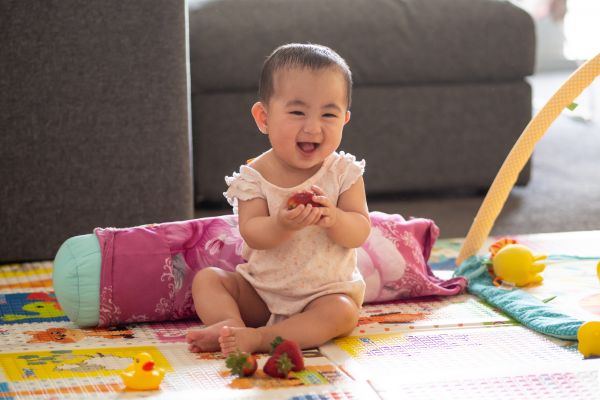
At six months old, a baby is suddenly much more awake to the world. They are no longer just looking around quietly from someone’s arms. They are reaching, rolling, grabbing, mouthing, kicking, listening, and trying to make sense of everything within arm’s length. This is also the stage when many parents begin thinking more carefully about toys. Not just what looks cute in the nursery, but what actually supports a baby’s natural development.
That is where Montessori-inspired play can feel refreshingly simple. Instead of filling the room with flashing lights, loud buttons, and toys that do all the work, Montessori toys invite a baby to explore with their own hands, eyes, ears, and curiosity. The best montessori toys for 6 month old babies are usually calm, purposeful, and easy to understand. They give the child just enough to discover without overwhelming them.
Why Montessori Play Fits This Age So Well
A six-month-old baby is learning through the body. Every tiny movement matters. When they reach for a wooden ring, pass a toy from one hand to another, or shake a soft rattle and hear a gentle sound, they are building important connections. It may look simple from the outside, but inside the baby’s brain, a lot is happening.
Montessori play respects this process. It does not rush a baby into skills they are not ready for. Instead, it offers materials that match the child’s current stage. For a six-month-old, that usually means toys that encourage grasping, tracking, sensory exploration, hand coordination, and early problem-solving.
The beauty of this approach is that babies do not need too much. In fact, fewer toys often work better. A small basket with a few carefully chosen objects can be far more engaging than a crowded play mat full of noise and color.
What Makes a Toy Montessori-Inspired
A Montessori-inspired toy is usually simple, beautiful, and made from natural materials when possible. Wood, cotton, silicone, metal bells, and smooth natural textures are common choices. These materials offer real sensory feedback. A wooden toy feels cool and firm. A fabric ball feels soft and light. A bell makes a real sound when moved.
The toy should also allow the baby to be active, not passive. A toy that lights up and sings after one button press may entertain a baby for a moment, but it does not always invite deep exploration. A simple grasping toy, on the other hand, asks the baby to hold, turn, mouth, drop, and try again.
For parents searching for montessori toys for 6 month old babies, it helps to think less about “teaching” and more about offering. The baby leads the experience. The adult simply prepares a safe space and watches what captures their attention.
Wooden Grasping Toys for Little Hands
At six months, babies are becoming more confident with their hands. They may grab objects with both hands, transfer toys from one hand to the other, and bring almost everything to their mouth. Wooden grasping toys are excellent for this stage because they are sturdy, simple, and satisfying to hold.
A classic wooden ring, interlocking discs, or a smooth clutching toy can support hand strength and coordination. These toys do not need bright paint or complicated features. Their shape is enough. The baby learns by feeling the curves, turning the object, and discovering how it moves.
Interlocking discs are especially popular in Montessori baby spaces because they are easy for little fingers to grip. They also roll slightly when placed on the floor, which can encourage a baby to reach, stretch, or begin moving toward them.
Soft Balls That Encourage Movement
A soft ball may seem ordinary, but for a six-month-old, it can be full of possibility. A fabric ball, crochet ball, or soft sensory ball encourages reaching, rolling, belly play, and early crawling attempts. When the ball gently moves away, the baby naturally wants to follow it.
This kind of toy supports gross motor development without forcing anything. During tummy time, a soft ball placed just within reach can encourage the baby to lift their head, shift weight, and stretch one arm forward. These are small but meaningful steps toward crawling.
The best soft balls for this age are lightweight and easy to grip. Some have gentle textures or stitched sections that make them easier for babies to hold. A ball does not need to make noise or flash. Its movement is already interesting enough.
Rattles With Gentle Real Sounds
Babies love cause and effect. At six months, they are beginning to understand that their actions can create a result. When they shake a rattle and hear a sound, they start connecting movement with response.
Montessori-style rattles are usually simple and pleasant to hear. A wooden rattle, a bell rattle, or a soft fabric rattle can be a lovely choice. The sound should be gentle rather than startling. Babies are still sensitive to loud noises, and calmer sounds often invite longer, more focused play.
A good rattle also supports wrist movement and grip. The baby may shake it by accident at first, then with more intention over time. That little moment of discovery, when they realize “I did that,” is exactly the kind of learning Montessori play values.
Teething Toys With Purpose
At six months, many babies are teething or preparing to teeth. Mouthing is also a major way babies explore the world, even before teeth appear. So, safe teething toys can absolutely be part of a Montessori-inspired play shelf.
Simple wooden teethers, natural rubber teethers, or food-grade silicone rings can offer comfort while also supporting sensory exploration. The key is to choose safe, easy-to-clean options with smooth edges and baby-friendly shapes.
A teether does not have to be shaped like a cartoon animal or covered in extra details. Often, the simpler designs are easier for babies to hold and explore. Since babies at this age put nearly everything in their mouth, checking materials and safety is especially important.
Object Permanence Boxes for Early Curiosity
Some six-month-olds may be ready to watch objects disappear and reappear, though many will grow into this activity over the next few months. An object permanence box is a classic Montessori material that introduces a simple idea: something can go away and come back.
For younger babies, the adult can slowly place a ball into the hole and let the baby watch it roll out. At first, the baby may only observe. Later, they may try to touch the ball, follow it with their eyes, or eventually place it into the box themselves.
This toy should not be rushed. If a baby is not interested yet, that is completely fine. Montessori play follows readiness. The same toy may suddenly become fascinating a few weeks later.
Treasure Baskets for Sensory Discovery
A treasure basket is one of the most flexible Montessori-inspired ideas for babies. It is simply a low basket filled with safe, everyday objects that offer different textures, shapes, weights, and sounds. For a six-month-old who can sit with support or is beginning to sit independently, a treasure basket can be deeply engaging.
The objects might include a wooden spoon, a soft cloth, a large silicone ring, a smooth brush, a fabric square, or a baby-safe metal cup. Everything must be large enough not to pose a choking risk, clean, and carefully checked.
The point is not to create a themed basket that looks perfect in a photo. The point is real exploration. Babies enjoy discovering that one object is heavy, another is soft, another makes a small sound when tapped. This kind of play feels humble, but it is rich with learning.
Simple Mirrors for Self-Discovery
A baby-safe mirror can be a wonderful Montessori-style addition at six months. Babies are often fascinated by faces, movement, and reflection. A mirror placed low on the floor during tummy time can encourage lifting the head and looking closely.
At first, babies do not understand that the reflection is their own face. Still, they respond to the movement, expressions, and light. Over time, mirror play supports visual tracking, body awareness, and social curiosity.
The mirror should be shatterproof and securely placed. Like all baby materials, it works best when used in a calm, supervised space. Sometimes a baby will smile, pat the surface, or turn toward a parent’s reflection. These quiet little exchanges can be surprisingly sweet.
How Many Toys Does a Six-Month-Old Really Need
It is easy to feel like babies need a lot, especially when every product seems to promise better development. But six-month-olds usually do best with a small selection. Too many toys can make play scattered. A few thoughtful options allow a baby to focus.
A simple rotation might include a grasping toy, a soft ball, a rattle, a teether, and one sensory object. After a few days, one or two items can be changed. This keeps the space fresh without overwhelming the baby.
When choosing montessori toys for 6 month old babies, quality matters more than quantity. The toy should be safe, purposeful, and suited to the baby’s current abilities. If the baby keeps returning to the same simple object again and again, that is not boredom. That is concentration.
Safety Comes Before Style
Montessori toys are often beautiful, but beauty should never come before safety. At six months, babies explore intensely with their mouths, so every toy needs to be checked carefully. Avoid small parts, loose beads, long strings, sharp edges, peeling paint, or anything that could break under pressure.
Parents should also consider weight. A toy that is too heavy may hurt if the baby drops it on themselves. Wooden toys should be smooth and well-made. Fabric toys should be washable. Rattles and teethers should be inspected often.
Supervision matters too. Even the best toy is not a replacement for an attentive adult nearby. Montessori play encourages independence, but for babies, independence happens inside a safe and lovingly prepared environment.
Creating a Calm Play Space
The play space does not need to be fancy. A soft mat, a low basket, a mirror, and a few toys are often enough. What matters most is that the baby has room to move freely. Floor time is especially valuable at this age because it allows rolling, reaching, stretching, and strengthening.
Try placing one or two toys just within reach rather than directly in the baby’s hands. This small distance encourages effort. The baby may wiggle, reach, pause, try again, and eventually grasp the object. That process is more important than the toy itself.
A calm space also helps adults slow down. Instead of constantly showing the baby what to do, Montessori-inspired play invites parents to observe. What does the baby notice? Which hand do they use? Do they prefer sound, texture, or movement today? These observations make play feel more connected.
Conclusion
The best Montessori toys for 6-month-olds are not complicated. They are simple objects that respect a baby’s natural curiosity and growing abilities. A wooden ring, a soft ball, a gentle rattle, a safe teether, a mirror, or a small treasure basket can offer more meaningful play than a room full of noisy gadgets.
At this age, babies learn by touching, tasting, moving, watching, and repeating. They do not need to be entertained every second. They need space, safety, and materials that invite them to discover. When chosen thoughtfully, montessori toys for 6 month old babies can support development in a quiet, natural way.
And perhaps that is the real charm of Montessori play. It reminds us that babies are already eager learners. We do not have to rush them. We only have to give them a peaceful place to explore, one small discovery at a time.