
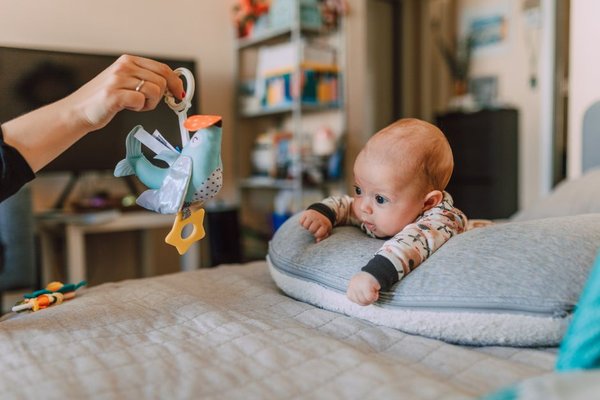
Somewhere between the newborn haze and the first birthday cake, babies go through an extraordinary transformation in how they experience the world. Their eyes learn to focus and track, their fingers learn to grasp and release, and their brains start wiring together sound, touch, sight, and movement into something meaningful. This is where sensory toys earn their keep. Rather than being another pile of plastic in the corner, the right sensory toys give babies structured ways to explore texture, contrast, sound, and movement at exactly the stage they’re ready for it. In this guide, we’re comparing the best sensory toys for babies aged 0-12 months, broken down by developmental stage rather than a generic “best of” list, so you can pick toys that actually match what your baby is doing right now.
Why Sensory Toys Matter in the First Year
Sensory play isn’t just a buzzword parents see on packaging. In the first twelve months, a baby’s brain is forming neural connections at a pace that will never quite be matched again. Every time a baby feels a crinkly texture, hears a rattle shake, or watches a high-contrast pattern move across their field of vision, they’re building the foundations for later skills like problem-solving, language, and coordination. Developmental toys designed with this in mind tend to focus on one or two senses at a time, rather than overwhelming a baby with flashing lights and loud noises. That’s an important distinction to keep in mind as you shop, because not every toy marketed as “sensory” is actually appropriate for a baby’s stage of development.
0-3 Months: High Contrast and Gentle Sound
Newborns see the world in blurry, low-resolution shapes for the first few weeks, and their vision doesn’t fully sharpen until around three months. This is why high-contrast black-and-white toys are so popular during this window, they’re simply easier for a young baby to see and focus on than pastel colours. Soft rattles with a gentle sound, crinkle cloths, and contrast cards or books are ideal choices here. Baby play at this age is mostly passive; babies are watching and listening rather than reaching and grabbing, so toys that stimulate sight and hearing without requiring fine motor control work best.
What to Look For
Choose toys with bold black, white, and red patterns, soft textures safe for a newborn’s delicate skin, and sounds that are soft rather than sharp or startling. Avoid anything with small parts, since even at this age it’s worth building safe habits early.
3-6 Months: Grasping, Reaching, and Textures
Around three to four months, babies start reaching for objects and bringing their hands together, and by five or six months many are grasping toys with real intent. This is the stage where texture-rich sensory toys come into their own. Fabric books with different materials on each page, teething rings with varied textures, and soft toys with crinkle inserts or squeakers give babies a reason to reach, grab, and explore with their hands and mouths (which, at this age, are basically an extension of their hands). Developmental toys with rings, loops, or handles are particularly useful because they’re easy for smaller hands to hold onto, even before a full pincer grip develops.
What to Look For
Look for toys that combine at least two textures, are safe for teething babies, and are light enough for uncoordinated hands to lift without frustration. Play gyms with hanging toys are excellent at this stage, since they encourage reaching without requiring a baby to sit up.
6-9 Months: Cause and Effect
Once babies can sit up independently, usually somewhere between six and eight months, a whole new category of sensory play opens up. Babies at this stage are fascinated by cause and effect: press a button, hear a sound; shake a toy, watch it rattle; drop something, watch it fall. Stacking cups, simple shape sorters, and push-button toys with lights or sound are excellent choices. This is also when many babies develop a pincer grasp, so smaller sensory toys like textured balls or soft blocks become appropriate, provided they’re still large enough to avoid any choking risk.
What to Look For
Prioritise toys that respond to a baby’s actions in a clear, immediate way. This builds a sense of cause and effect that supports early problem-solving skills. Textured balls that are easy to grip and roll are a favourite at this stage, especially once crawling begins.
9-12 Months: Fine Motor Skills and Early Problem-Solving
In the final stretch before the first birthday, babies are refining their pincer grasp, pulling themselves up to stand, and often taking their first cruising steps along furniture. Sensory toys at this stage can be a little more sophisticated. Simple puzzles with large knobbed pieces, nesting toys, and busy boards with latches, dials, and textures all support the fine motor skills babies are actively practising. Toys that combine multiple senses, sound, texture, and movement together, tend to hold attention longest, since babies at this age are curious and easily bored by anything too simple.
What to Look For
Choose toys that reward persistence, such as a shape sorter that takes a few tries to master, since this builds concentration alongside sensory input. Busy boards and activity cubes are particularly good value here, as they combine several types of sensory play in one toy and tend to last well beyond the first birthday.
How to Choose the Right Sensory Toy for Your Baby’s Stage
The single biggest mistake parents make when buying sensory toys isn’t picking a bad toy, it’s picking a toy that’s out of step with where their baby actually is developmentally. A busy board full of latches and dials will frustrate a four-month-old who can’t yet coordinate a pincer grasp, just as a simple rattle will bore a ten-month-old who wants cause-and-effect challenges. Rather than shopping by age printed on the box alone, it helps to watch what your baby is actually doing: are they reaching, sitting, crawling, standing? Match the toy to that skill, and you’ll get far more engagement, and far more genuine developmental benefit, than buying whatever’s trending.
Frequently Asked Questions
What are the best sensory toys for a newborn?
For newborns up to about three months, high-contrast black-and-white toys, soft rattles, and crinkle cloths work best, since a young baby’s vision is still developing and hasn’t yet sharpened enough to appreciate colour or fine detail.
How many sensory toys does a baby actually need?
There’s no magic number. A small rotation of four or five toys suited to your baby’s current stage is usually more effective than a large collection, since babies benefit from focused, repeated exploration rather than constant novelty.
Are sensory toys safe for babies to put in their mouths?
Reputable developmental toys designed for babies 0-12 months are made from non-toxic, baby-safe materials specifically because mouthing is a normal and expected part of how babies explore. Always check the toy is appropriately sized to avoid choking hazards for your baby’s age.
Do sensory toys really make a difference to development?
Yes, though it’s worth keeping expectations realistic. Sensory play supports the neural connections behind coordination, language, and problem-solving, but toys are one part of a much bigger picture that includes talking, reading, and everyday interaction with caregivers.
Choosing sensory toys for a baby’s first year doesn’t need to be complicated once you think in terms of stages rather than age ranges printed on packaging. From the high-contrast simplicity newborns need, through to the busy boards and puzzles that keep a nearly-one-year-old engaged, the goal at every stage is the same: give your baby just enough of a sensory challenge to stay curious without becoming frustrated. Pay attention to what your baby is doing right now, reach, sit, crawl, stand, and let that guide your next purchase. Get that right, and sensory toys stop being clutter and start doing exactly what they’re meant to do.