
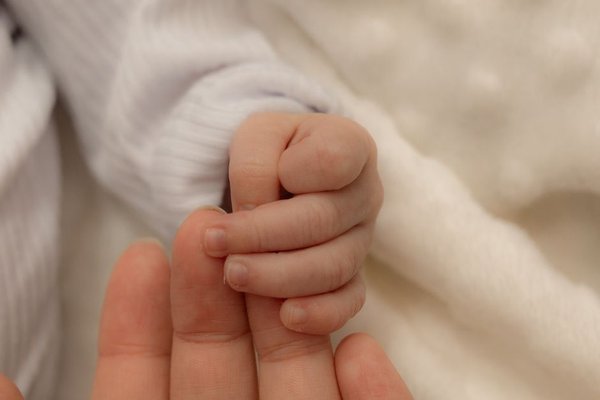
A newborn can wrap tiny fingers around yours with surprising strength. Yet that early grip is very different from the careful finger-and-thumb movement a baby eventually uses to pick up a piece of food. Baby grasping milestones show how hand movements gradually change from automatic reflexes to deliberate reaching, holding, transferring, and releasing.
Instead of watching only for the first successful pickup, notice how your baby approaches a toy. Do they swipe, open their hand, adjust their grip, or move the object from one hand to the other? Each change tells part of the story.
Baby Grasping Milestones by Age
Birth to 2 Months: The Reflex Grip
Touch a newborn’s palm and their fingers may curl around yours. This palmar grasp reflex happens automatically; it does not mean the baby has decided to hold on. Newborn hands are often fisted, although they gradually spend more time open and relaxed. As the reflex fades over the first few months, increasingly voluntary movements take its place.
The distinction matters because a strong reflex is not the same thing as fine motor control. Your baby is beginning to discover that those little hands belong to them.
Around 3 to 4 Months: Holding and Swiping
Babies begin watching their hands, bringing them to their mouths, and batting at interesting objects. By four months, the CDC lists holding a toy placed in the hand and swinging an arm toward toys among common milestones. A palmar grasp baby uses at this stage relies on several fingers closing around an object, rather than a precise fingertip pinch.
Offer a light, easy-to-hold rattle. Your baby might grasp it briefly, wave it without meaning to, and drop it.
Around 5 to 6 Months: Reaching to Get Something
Among the clearest baby reaching milestones is the shift from accidentally hitting a toy to reaching for something your baby wants. The CDC includes reaching to grab a desired toy on its six-month milestone checklist. Many babies hold objects against their palms with their whole hands, then bring them toward their mouths to explore.
Reaching takes more than finger strength. Vision, posture, shoulder control, and timing must work together. A baby who is still learning to balance while sitting may reach differently from one lying comfortably on a play mat.
Around 7 to 9 Months: Transferring and Raking
Hand movements become more adaptable during the second half of the first year. By nine months, many babies can move an object from one hand to the other and use their fingers to rake food toward themselves, both skills identified by the CDC.
In a raking grasp, several fingers sweep an item toward the palm. It is less precise than a pincer grasp, but it provides a bridge to finer control. You may also notice your baby banging toys together, turning them around, and dropping them repeatedly. Releasing an object on purpose is its own achievement.
Around 10 to 12 Months: Picking Up With Thumb and Finger
A pincer grasp uses the thumb and index finger to lift a small item. Early attempts can look awkward, with the side of the thumb doing much of the work. The CDC includes picking up food between the thumb and pointer finger among milestones most children achieve by one year.
That does not mean every pincer grasp baby shows the skill on an exact date. The shape of the object, a baby’s position, and their opportunity to practice can all influence what you see.
Look for Progress, Not a Perfect Timeline
Infant grasp development is a series of overlapping changes, not a calendar with rigid deadlines. A baby may reach accurately yet find it difficult to let go. Another may pick up food neatly while still grabbing most toys with the entire hand.
CDC milestone ages indicate skills at least 75% of children can do by that age. They are conversation starters, not diagnostic tests. If your baby was born prematurely, ask a clinician whether corrected age should guide milestone comparisons.
Everyday Games That Encourage Hand Control
Put an Interesting Toy Within Reach
During supervised floor play, position a soft, lightweight toy just within reach, slightly to one side. Give your baby time to notice it and try moving toward it before shifting it closer. Alternate sides to encourage both arms. You can pair this activity with ideas from tummy time activities for babies.
Practice Transferring and Releasing
Offer one easy-to-grip toy, then present another. Your baby may switch hands, drop the first toy, or try holding both. Later, provide a wide, unbreakable container and large blocks. Demonstrate dropping a block inside and let your baby experiment. The goal is discovery, not perfect performance.
Make Mealtimes a Safe Chance to Practice
Once your baby is ready for solids and can sit appropriately supported, supervised finger-food experiences can encourage more controlled grasping. For example, a suitably prepared, soft piece of cooked vegetable may invite a careful pickup. Offer foods that match your baby’s eating abilities and follow current choking-prevention advice.
Never use coins, beads, buttons, dry beans, or other tiny nonfood items as grasping exercises. Babies explore by putting objects in their mouths. For related guidance, see starting finger foods and baby sitting milestones. Safe opportunities matter more than specialized toys.
When to Discuss Grasping With a Healthcare Professional
Speak with your baby’s clinician if they are not reaching for interesting objects around six months, are not transferring objects or raking food toward themselves around nine months, or are not using thumb and finger to pick things up around their first birthday. These observations deserve discussion, not automatic assumptions about a diagnosis.
Seek advice sooner if your baby rarely opens a hand, seems unusually stiff or floppy, consistently favors one hand in early infancy, or loses a skill they previously used. You know your baby best, and you do not need to wait for the next scheduled appointment to raise a concern.
Frequently Asked Questions
When do babies start grasping toys voluntarily?
Voluntary control develops gradually. Around four months, many babies hold a toy placed in their hand. By approximately six months, many reach toward and grab a toy they want.
What is the difference between palmar and pincer grasp?
A palmar grasp holds an object against the palm using several fingers. A pincer grasp uses the thumb and index finger for more precise pickups. The newborn palmar reflex is automatic; later grasps are voluntary.
Should a nine-month-old have a pincer grasp?
Not necessarily. Raking with the fingers is common around nine months. The CDC lists picking things up between thumb and pointer finger as a one-year milestone, so look at the full pattern of hand skills.
Do babies need special toys for fine motor development?
No. Safe rattles, soft toys, large blocks, supervised floor play, and responsive interaction give babies many ways to practice. Expensive gadgets cannot guarantee faster progress.
Small Hand Movements, Big Changes
From the reflex grip of a newborn to the increasingly precise pincer grasp, hand development is about gaining choice. Your baby learns to reach for something interesting, hold it, explore it, and eventually let go. Enjoy those ordinary moments of discovery, provide safe practice, and ask for guidance whenever development concerns you.