
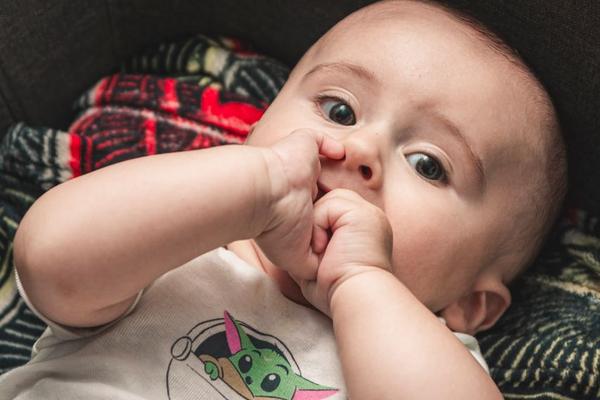
Teething can turn a settled baby into a dribbly, chewy, wakeful little person almost overnight. It is also easy to blame every new symptom on a tooth, which is why knowing the usual baby teething signs and remedies matters. Most teething discomfort is mild and short-lived, and simple measures are often enough to help. The key is recognising what fits normal teething and what may point to illness instead.
When do babies start teething?
Most babies start teething at around 6 months, although there is a wide normal range. Some begin before 4 months, some after 12 months, and a small number are born with a tooth already present. The front teeth commonly appear first, with more teeth emerging gradually through the toddler years. Most children have all their milk teeth by the age of 2 to 3 years.
So if you are wondering when do babies start teething, age is only a guide. What you can see around the gums and changes in your baby’s behaviour are often more useful than the calendar.
Common teething symptoms in babies
Teething symptoms baby by baby can look different. Some teeth arrive with barely any fuss, while others cause a few difficult days. Typical signs include a sore or red gum where a tooth is coming through, increased dribbling, chewing or gnawing on toys and fingers, irritability, and disrupted sleep. One cheek may look flushed, and some babies rub an ear on the same side as the erupting tooth.
A baby’s temperature may be slightly raised during teething, but NHS guidance describes this as below 38C. A true fever should not automatically be put down to teething.
Teething or illness?
This distinction matters because common infections often happen at the same age that teeth begin to appear. There is no good evidence that teething causes diarrhoea. If your baby has a temperature of 38C or higher, persistent vomiting or diarrhoea, unusual drowsiness, breathing difficulty, poor feeding, dehydration, or a rash that concerns you, seek medical advice rather than assuming a tooth is responsible.
For a baby under 3 months, a temperature of 38C or higher needs urgent medical advice. For babies aged 3 to 6 months, seek advice for a temperature of 39C or higher. If you are worried about how your baby looks or behaves, contact NHS 111 or your GP.
Safe teething relief to try first
The most useful teething remedies UK parents can start with are simple, non-medicinal measures. A clean, cooled teething ring can give your baby something firm and safe to bite. Chill it in the fridge according to the manufacturer’s instructions, but do not freeze it because a frozen ring can damage delicate gums. Never tie a teething ring around a baby’s neck.
Gently rubbing the sore gum with a clean finger can also provide relief. Extra cuddles, play and distraction may help when your baby is fretful. If dribbling is making the skin around the mouth or chin sore, gently wipe the area rather than repeatedly rubbing it.
Food-based comfort for babies over 6 months
If your baby is 6 months or older and is already weaning, cool soft fruit such as melon can be soothing to chew. Always supervise closely because food can present a choking risk. Avoid sugary foods and rusks as routine teething aids, since frequent sugar exposure can contribute to tooth decay even when only a few teeth have appeared.
A practical approach is to keep two safe options ready. During an unsettled afternoon, for example, offer a fridge-cooled teething ring for a while, then switch to a cuddle or gentle gum massage. If your baby is old enough for solids, supervised suitable cool fruit can be another option. Rotating simple measures may be more useful than relying on one remedy all day.
Can babies have pain relief for teething?
If your baby seems to be in pain despite comfort measures, sugar-free paracetamol may be suitable from 2 months of age. Ibuprofen may be suitable from 3 months for babies who weigh at least 5kg. The correct product and dose depend on age, weight and individual health factors, so follow the label carefully and ask a pharmacist or GP if you are unsure. Do not give aspirin to anyone under 16.
Do not automatically alternate paracetamol and ibuprofen unless a healthcare professional has advised you to do so. Ibuprofen is not suitable for every child, including babies who are dehydrated, and extra advice is needed for some health conditions.
What about teething gels and homeopathic products?
Teething gels are widely marketed, but NHS guidance says there is a lack of evidence that they are effective. Try a teething ring, gum massage or appropriate simple pain relief first. If you still want to use a gel, choose one specifically designed for young children and ask a pharmacist for advice. General mouth-pain gels are not suitable substitutes for infant teething products.
Lidocaine-containing teething products are pharmacy medicines in the UK and should be considered only when simpler measures have not provided enough relief and after appropriate advice. Homeopathic products are not recommended for teething, and unlicensed products bought online may carry additional risks.
Look after new teeth from the start
Once the first milk tooth appears, start brushing with a tiny smear of fluoride toothpaste. NHS guidance recommends toothpaste containing at least 1,000 ppm fluoride for babies and toddlers up to age 3, with brushing last thing at night and on one other occasion. Early brushing protects new teeth and helps make tooth care part of the daily routine.
Useful related topics for parents include baby fever and temperature guidance, starting solids safely, and caring for your baby’s first teeth. These make natural internal linking opportunities within a wider baby health section.
Frequently asked questions
How long do teething symptoms last?
Symptoms often come and go around the time a tooth is moving through the gum. Some babies are unsettled only briefly, while others have several difficult days. Ongoing or worsening symptoms should not automatically be blamed on teething.
Does teething cause a high fever?
No. A baby’s temperature may be slightly raised, but a temperature of 38C or above should be treated as a possible fever rather than assumed to be teething. Follow NHS age-based guidance and seek medical advice when appropriate.
Can I freeze a teething ring?
No. A teething ring can be cooled in the fridge if its instructions allow, but it should not be frozen because a frozen ring may damage the gums.
Helping your baby through teething
Most teething phases can be managed with patience, safe things to chew, gentle gum massage and extra comfort. Medication is an option when pain is significant, but it should be age-appropriate and used exactly as directed. Just as importantly, do not let teething become an explanation for every fever, digestive symptom or change in behaviour. Knowing the usual signs gives you a calmer starting point for deciding when your baby simply needs soothing and when they need medical advice.